A few days ago I posted Part I of this saga, about how NYSED officials delayed for a year and half the release of their FOILed emails to
the Gates Foundation, Wireless Generation/Amplify, and inBloom Inc. about their plans to share personal student data with these private corporations. Some of those emails were finally released to
our lawyers on December 11, 2014, the day after John King announced his
resignation as Commissioner. Part II is below, with
excerpts from the their emails sent in 2011.See also Part III and Part IV.
When my FOIL was
finally responded to I received hundreds and hundreds of pages with printed out
emails to and from NYSED and the Gates Foundation mostly; offering all-expense
trips for various meetings about teacher evaluation, data collection, and other
issues, as well as a pile of contracts and agreements. It took weeks just to sort them and start to
look through them. Sadly there were no
emails from Merryl Tisch’s account, as I had asked for; and no emails from most
of the state officials whose communications we had FOILed. But we did find out some juicy details; here are some excerpts:
1/6/2011: The
first email that refers to the incipent inBloom project is sent to John King, then Deputy
Commissioner, from Stacey
Childress, who led the data-sharing project for the Gates Foundation. She asks to schedule a “time to talk” about
the “intersections between your RTTT instructional improvement plans and a
project we are working on Gates.”
1/25/11: Joe Scantlebury, Senior Policy Officer of the
Gates Foundation, thanks Commissioner Steiner and Deputy Commissioner King for
joining a call this morning; he adds that “the foundation is supportive of your
interest to implement your P-16 data plans.”
1/26/11: The next day, John King
drafts a request to the Foundation to use the leftover funds they had received
for the Regents Research fellows to be used to hire a “project manager” for a
state longitudinal database:
“In November 2007, The University of the State of New York – Regents
Research Fund was awarded approximately $3 million in grant funding from the
Bill and Melinda Gates Foundation to support the design of a comprehensive
School Improvement organization within the Department. [Or was this really an
embedded Gates operation inside a state agency?]. At this time, an unexpended
balance from this grant exists in the amount of $561,000, which includes
interest earned on the grant and The University of the State of New York –
Regents Research Fund requests a no-cost extension for the unexpended balance
of the above-referenced grant for four years until December 31, 2014. As described below, the Department proposes
to use such funds to continue the work outlined in the original grant
application.
With support from The Bill and Melinda Gates Foundation, the department
, together with the Parthenon Group, the State University of New York (SUNY) ,
the City University of New York (CUNY), the NYC Department of Education and the
Yonkers and Syracuse City School Districts, have collaborated to develop a
design and implementation plan for a statewide P-16 Data System. NYSED is actively leveraging these design
plans and governance model as it implements $115 million in data system
development work over the next three to four years, including funds received
from two federal Institute of Education Science grants, a Race to the Top
Award, and NYS matching funds.”
 |
| Ken Wagner, then NYSED Asst. Commissioner for Data |
5/23/11: John King, now the Education Commissioner following David Steiner's resignation, drafts a statement and sends it to the Gates Foundation for approval. It says that
to help “our teachers prepare students to meet the CCSS [Common Core State
Standards]” they need an “integrated and flexible student data system” whose
cost will be minimized by partnership with the Council
of Chief State School Officers (CCSSO) and support by Gates.
This system will integrate “data sharing and
instructional practices in all regions of the state” as the most “cost effective to provide students, parents,
teachers, administrators and policymakers in NY with the educational
information they want and need.”
Deborah Robinson of Gates replies that he should “focus more on the benefits to teachers” and “draw less attention to the data/infrastructure aspects”. This would become a repeated theme of
the Foundation; persuading the state to deliver their preferred narrative: that this huge data system resulted from express desires of teachers, rather than their own
grandiose plans to encourage the rapid spread of instruction via software and computers.
5/24/11:
In a “Software Transfer and License Agreement” NYC DOE transfers all the
software developed as part of their ARIS system to NYSED. The agreement reveals that NYC DOE “intends to “cut over” to the NYSED EDP [Education
Data Portal, one of the many euphemisms for the state data system] once it
is up and running all NYCDOE functionality has been launched…NYC DOE will
be responsible for all costs associated with integrating ARIS Reports and ARIS
Learn into the SLI [Shared Learning Infrastructure] environment.”
5/27/11: In one of the first news articles
on this, Ed Week has an article describing a project being
developed by Gates, Carnegie and the Council of Chief State School
Officers to provide a “common
dashboard” to impart the elements of the Common Core: “CCSSO and the states of New York, Illinois,
Massachusetts, North Carolina, and Colorado will take the lead in helping
design and pilot the platform, with financing promised by the Seattle-based
Bill & Melinda Gates Foundation and the Carnegie Corporation of New York.
Four other states—Delaware, Kentucky, Georgia, and Louisiana—are planning to
take part in the near future, with the goal of implementing it in all nine
states by 2013.”
6/2/11: A contract is drawn up between Wireless
Generation for the NYSED Education Data Portal or a separate internal data
system, the first of many that erroneously states that the contractor was a
non-for-profit corporation. Whether
inBloom was eventually intended to replace this internal system never became clear.
6/6/11: Ongoing negotiations over the Memorandum of
Understanding between NYSED and the Shared Learning Collaborative LLC (the
company that would later be called inBloom).
As we will see, NYSED continues to argue with Gates Foundation officials
for months, mostly around the issue of confidentiality. Ken Wagner says he is
concerned about the way the agreements mandates full confidentiality:
“We cannot build support for NY’s
participation, including with our State [Regents] board, if we cannot share
detailed information to explain the benefits.” Yet the Gates Foundation appears intent on
protecting their own privacy, especially as concerns details of the Shared Learning
Collaborative, which they call “the Company”, an LLC recently formed in
Washington by Gates and Carnegie.
The Gates Foundation insists that NYSED agree to a
MOU that NYSED cannot make any facts known about the project, even those “already
publicly available” without ”the Company’s priori written approval.” Their
hubris is stunning; demanding such secrecy from a governmental agency that is
supposed to be responsive to the public.
The arrogance and secrecy of Foundation officials combine to intensify
opposition in the months to come.
The Foundation drafts a separate MOU between
the SLC LLC and Wireless Generation to develop the infrastructure to store the
records for up to 20 million students, including “enrollment, achievement and
biographical data for all participating states and school districts.” This will also somehow be used in connection
to the project to build an internal state system: “In order to avoid the
duplication of effort and consolidate the use of funding, NYSED desires to
leverage the Data Infrastructure to be developed by the Company. “ The negotiations over the MOU go on for
nearly a year.
6/14/11: Daily News breaks the story of a proposed no-bid contract between
Wireless and NYSED for their internal data system, with the title, "Company Overseen by Joel Klein Poised to Clean Up with $27M No-Bid State Contract."
 |
| Joel Klein, former NYC Chancellor & then head of Wireless/Amplify |
Much controversy ensues,
primarily as a result of conflict of interest concerns. Six months before,
Wireless Generation had been bought by Rupert Murdoch’s News Corporation, just
days after Joel Klein announced he would resign as chancellor of NYC schools, to run Wireless (later renamed Amplify) and head up NewsCorp's new “educational” online division and “overseeing investments in digital learning companies.”
6/24/11 – Tom Dunn, NYSED chief
communication officer, tells Debbie Robinson, Gates Foundation senior
communications officer, that they have been contacted by Stephanie Saul,
a NY Times reporter. Robinson tells Dunn that Saul has already called Wireless,
and that she didn’t ask anything about Gates Foundation or Carnegie Corporation
(the other backed of the data project) and that the communication person at
Wireless, Joan Lebow, has found Saul to be “fair, balanced and thorough.”
 |
| Stephanie Saul of the NY Times |
Later that day, Dunn writes Robinson that
Wagner’s conversation with Saul lasted 75 minutes, and that she did “not have a
good understanding of scope of what we seek to do.” Saul apparently asked whether they were
“advised to avoid WG [Wireless Generation]” and if “Parthenon [another Gates
consultant] had advised them against Wireless because they had been involved in
developing ARIS (NYC DOE’s expensive and widely considered defective NYC data
system.)
 |
| Tom Dunn, NYSED Communication Officer |
Dunn writes: “Ken laid out the Parthenon
role in bringing us together with NYC to talk about ARIS.” Saul then asked him about the fact that Stacey
Childress, head of the data project for Gates, was also a Wireless board
member. Ken said he had been unaware of
this, and told Saul that “the most important considerations was saving taxpayer
$$$.” Saul asked if NYC was driving the
bus. Wagner said that they “were
influential.” She asked when the program
will be announced and how much Wireless was getting for the project. Ken said that was a question for Gates. “All in all Ken did an outstanding job with
her,” says Dunn. It appears that none of Saul’s questions related to data
privacy, security or parental consent.
6/27/11: Ken Wagner drafts follow up talking
points for Stephanie Saul and sends them to Debbie Robinson of Gates, who makes
some suggested changes, adding how the data system will “Provide support for teachers by giving them the tools they asked for”
and that the “Cutting edge technologies”
that will hook into the SLC will be “differentiated
and tailored to students.”
She adds that “teachers have requested this support, in order to prepare student to
meet the Common Core standards.” As
before, this mantra is central to the Gates PR -- to make it appear that these
intrusive data collection and sharing systems were created at their behest of
teachers, rather than to mechanize education and abet the outsourcing of instruction
to software vendors. The Gates talking points also emphasize how
much better the “Education Data Portal” constructed by Wireless Gen would be
than ARIS.
Stephanie Saul ends up not writing anything
about the project. When I contact
about her about the risk to student privacy nearly a year later in May 2012, she responds that she had looked into the project, but “At the end of they [sic] day, I didn't know what the story was. There
was no clear wrongdoing and lots of innuendo.”
(The
NY Times refuses to cover any aspect of the inBloom controversy or the topic of
student privacy until more than two years later, in October 2013, after I contacted Natasha
Singer, one of their technology reporters on Twitter, who confirms that none of
the education staff is interested in the issue.
Even then, though Singer writes several stories, she mentions New York’s
involvement in the data-sharing project only in passing, and focuses instead on Colorado. Because
of their lack of interest, the Times education staff missed out on what
soon became one of the biggest national stories – the exploding concern with
student privacy – even though this debate started in their own backyard.)
 |
| Rachel Monahan, formerly NY Daily News |
7/28/11:
Laurence Holt of Wireless emails Ken Wagner about a story that Rachel
Monahan of the Daily News is working on, focused on the no-bid nature of the contract
NYSED has awarded Wireless to build a (separate) state data system. Holt points out that there were 17 bidders on
the initial contract. Monahan is said to
have asked him if it was more “cost-effective” for New York, given their
involvement in the Shared Learning Collaborative.
Holt says to Wagner he will direct her to
NYSED to answer her questions. Again, as
in the case of the Times reporter, Monahan’s focus is on the potential
conflicts of interest and not the privacy implications– the issue which eventually
kills the Wireless Contract the following month, when the State Comptroller cancels
the contract.
Soon, Class Size Matters, later joined by
the Working Families Party and NYSUT, the state teachers union, begin a
campaign to ask the State Comptroller DiNapoli to cancel the contract. He has the authority to do this due to its
no-bid nature. Our campaign is focused on the fact that Wireless is owned by Rupert
Murdoch’s NewsCorp, which has already been implicated in a huge scandal in the
UK, with one of its papers accused of violating privacy in numerous ways,
including hacking into a murdered child’s cell phone.
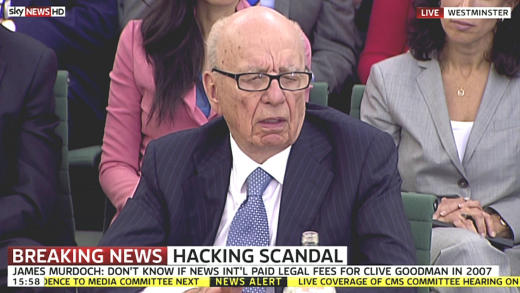 |
| Rupert Murdoch at UK hearings on phone hacking in July 2011 |
8/ 25/11: Comptroller
DiNapoli informs NYSED that he is rejecting their contract with
Wireless because of privacy concerns: “in light of the significant ongoing investigations and continuing
revelations with respect to News Corporation, we are returning the contract
with Wireless Generation unapproved.”
Not until nearly two years later, on March 13, 2013 does the Daily News report on
the parent opposition to inBloom due to privacy concerns. The Times and Daily News lack of interest
in the privacy issue are shared by other media outlets; one of the editors of
GothamSchools (later Chalkbeat NY) tells me that she doesn’t believe that
student privacy is a real issue.
CORRECTION: Rachel Monahan, now working as a reporter in Portland OR, reminds me that she wrote a story focused on the privacy implications of the original Wireless deal (as opposed to the separate inBloom deal) in July 2011 -- thank you Rachel!
CORRECTION: Rachel Monahan, now working as a reporter in Portland OR, reminds me that she wrote a story focused on the privacy implications of the original Wireless deal (as opposed to the separate inBloom deal) in July 2011 -- thank you Rachel!
8/24/11:
NYSED officials are invited to a “convening meeting” is held at Allegro
Hotel in Chicago with the participants in the data project, with all expenses
paid by Gates Foundation. “Regarding your travel arrangements, the
Shared Learning Collaborative will cover all expenses related to your travel to
and from the meeting, including meals and hotel.”
The focus is “to help state teams form an
understanding of their role and the resource commitments required” – because
states and districts will soon have to pay a per student fee for the SLC to
collect and share their data when the Gates funding runs out. In addition, breakout sessions on
communications are led by PR flacks Katie Ford and Barbara Grimes of Waggener
Edstrom.
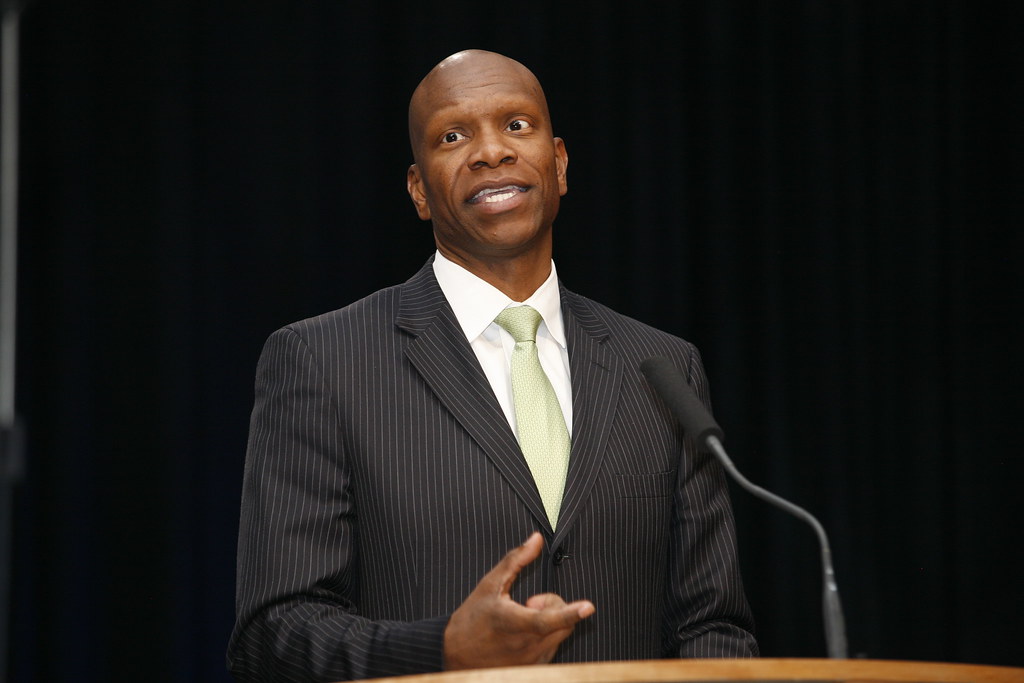 |
| Henry Hipps of the Gates Foundation |
8/31/11 – “Looking forward to the NY
launch,” writes Henry Hipps of Gates to Ken Wagner,”though I know questions
have been raised with the recent news about your contract…. [Wireless cancellation
by the Comptroller], but we are committed to helping you and your team remain
in Phase I” of the Shared Learning Collaborative.
At that time Phase I states are CO, IL, MA,
NC, NY, while Phase 2 states include DE, GA, KY, LA. (Much later, reporter Stephanie Simon reveals
in a tweet that Phase 2 states never made a real commitment to share student
data, despite Gates Foundation claims.)
11/2/11: Mary Ann VanBlarcom of NYSED writes
to Gates officials that they need to know if their travel expenses to yet
another meeting in DC will be picked up by the Foundation, as “staff travel in
NYS is working under very stringent travel restrictions.” Seven NYSED staffers are planning to attend, with
expenses that need to be covered : Kate Gerson and Julia Rafal, Regents
fellows, Ann Murphy, Associate Commissioner, Allison Armour-Garb of the Office
of Teaching, Elean Bruon, Project Coordinator for Educator Effectiveness, and
two “District Based Practitioners”: Michael Schmidt from Syracuse and Shaun
Nelms from Rochester. Christina Esquivel
of Gates responds promptly that “The Foundation will cover the cost of travel
for all participants.”
 |
| Gene Wilhoit of CCSSO |
As of this date, Gene Wilhoit, head of the Council of Chief State School Officers, seems to be also influential in terms of
carrying out this project, and is in regular communications with the state
education chiefs who are participating, including King. He informs them that yet another meeting is
scheduled in Phoenix, and again, outlines the need to develop “revenue sources”
to cover the costs of the data project.
He also alerts them to “a governance advisory group” that would consist
of him, representatives from the Carnegie Corporation and Gates Foundation, as
well as “key subject matter experts.”
12/8/2011: Wireless writes NYSED that they may be in the process of
preparing one or more bid documents “that may bear some relationship to the
contract for the Electronic Data Portal” that the Comptroller has rejected. Wireless warns them against from sharing
certain details related to assessment and cut scores that were part of their
previous contract.

12/31/11: According to its IRS 990 form, the Gates Foundation has already spent an
astounding $76.5 million on the project during the 2011, described
as “a direct equity program related to build, related investment to build,
manage, and promote the Shared Learning Infrastructure (SLI).” They would eventually spend over $100 million
on this effort before inBloom collapsed.
Now check out Part III which reveals how NYSED and Gates officials react to questions about their plans in 2012, and Part IV that recounts the launch of inBloom in 2013, soon followed by increasing controversy in the media and parent protests, leading to its collapse.