Showing posts with label editorial. Show all posts
Showing posts with label editorial. Show all posts
Sunday, July 7, 2013


Thursday, September 1, 2011
The 40% solution? NYT editors parrot the Billionaire Boys Club and ignore the research
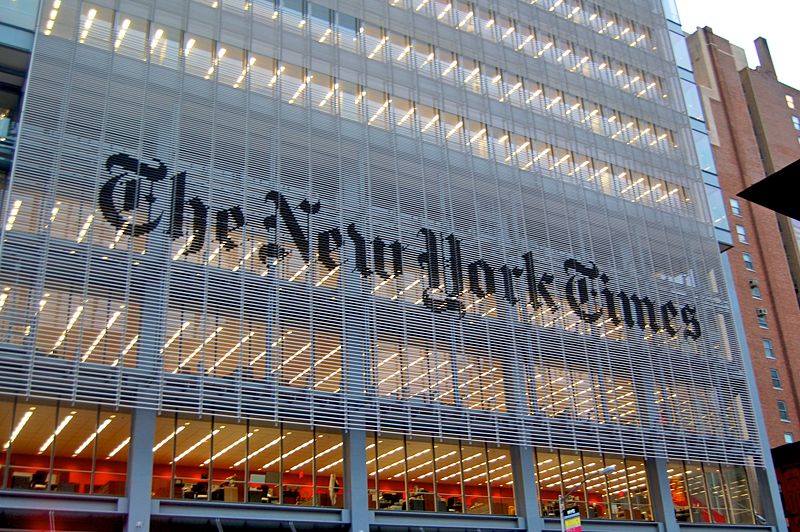
Today, in an editorial, the NY Times inveighs against the recent court decision that held that the new teacher evaluation system should be based 20 percent rather than 40 percent on state test scores, as mandated by a law passed by the Legislature.
Somehow NY Times editors are under the delusion that teacher evaluation system based 40 percent on state test scores, which themselves have been absurdly manipulated over the last several years, would be a more “rigorous” system. They even appear to agree that if any teacher did poorly on the that one portion of the system for one year only, he or she would deserve the lowest of ratings – as the Commissioner King would prescribe – in a perversion of the entire notion of multiple measures.
It is sad that none of the research showing the fallibility and potentially destructive effects of such a simplistic rating system has managed to penetrate into their heads. Thus the Times shows itself as averse to research and expert opinion on the subject as the Wall Street Journal and the Daily News – and as firmly under the sway of the oligarchy of ignorant billionaires and hedge fund operators who are now making education policy in this nation.
As Marc Epstein put it, “If the issue is education reform, put Governor Chris Christie in a room with Governor Andrew Cuomo; Joel Klein, the education reformer and lifelong Democrat; Secretary of Education Arne Duncan; and the editorial boards of the Wall Street Journal, Washington Post, New York Post and New York Times, and you'd think you're at a family reunion straight out of "The Adventures of Ozzie and Harriet."
For a far more reasonable analysis of this eminently fair court decision, that merely ratified the notion that the Regents and the State Education Department should respect the legal framework informed by their own advisory task force and negotiated by themselves, the legislature and the unions, see Mike Petrilli of the conservative Fordham Institute in NY Regents: Stop the madness!
Too bad the editorial board of the NY Times continues to show itself as averse to the expert consensus as embodied in this letter from the National Academy of Sciences on “Race to the Top”, that warned against a reductionist and ultimately unreliable teacher evaluation based heavily on standardized test scores, as well as this letter from renowned academics, protesting Commissioner King’s unilateral decision to ignore the law.
The NY Times editors should recall their principled stance they took when the Bush administration allowed the influence of politics and big money to overwhelm research, science, and good sense. Instead, on the issue of education policy, they seem headed in the same ignorant and profoundly damaging direction.
Somehow NY Times editors are under the delusion that teacher evaluation system based 40 percent on state test scores, which themselves have been absurdly manipulated over the last several years, would be a more “rigorous” system. They even appear to agree that if any teacher did poorly on the that one portion of the system for one year only, he or she would deserve the lowest of ratings – as the Commissioner King would prescribe – in a perversion of the entire notion of multiple measures.
It is sad that none of the research showing the fallibility and potentially destructive effects of such a simplistic rating system has managed to penetrate into their heads. Thus the Times shows itself as averse to research and expert opinion on the subject as the Wall Street Journal and the Daily News – and as firmly under the sway of the oligarchy of ignorant billionaires and hedge fund operators who are now making education policy in this nation.
As Marc Epstein put it, “If the issue is education reform, put Governor Chris Christie in a room with Governor Andrew Cuomo; Joel Klein, the education reformer and lifelong Democrat; Secretary of Education Arne Duncan; and the editorial boards of the Wall Street Journal, Washington Post, New York Post and New York Times, and you'd think you're at a family reunion straight out of "The Adventures of Ozzie and Harriet."
For a far more reasonable analysis of this eminently fair court decision, that merely ratified the notion that the Regents and the State Education Department should respect the legal framework informed by their own advisory task force and negotiated by themselves, the legislature and the unions, see Mike Petrilli of the conservative Fordham Institute in NY Regents: Stop the madness!
Too bad the editorial board of the NY Times continues to show itself as averse to the expert consensus as embodied in this letter from the National Academy of Sciences on “Race to the Top”, that warned against a reductionist and ultimately unreliable teacher evaluation based heavily on standardized test scores, as well as this letter from renowned academics, protesting Commissioner King’s unilateral decision to ignore the law.
The NY Times editors should recall their principled stance they took when the Bush administration allowed the influence of politics and big money to overwhelm research, science, and good sense. Instead, on the issue of education policy, they seem headed in the same ignorant and profoundly damaging direction.
Subscribe to:
Posts (Atom)