Showing posts with label NYC schools. Show all posts

Wednesday, July 1, 2026

The testimony of NYC students on the use -- and misuse-- of AI in the classroom


Above is a video of the terrific testimonies of four NYC students involved in NYCLU's Teen Activist Project on the use of AI in their schooling, presented at the Joint Hearings of the Education and Technology Committees on June 26, 2026 with also their responses to questions from Chair Eric Dinowitz.


Yelani Joseph’s testimony 

Good afternoon, my name is Yelani Joseph, I’m sixteen years old, a sophomore from Brooklyn, New York, and an organizer with the NYCLU’s Teen Activist Project. Thank you for the opportunity to speak today. 

When people talk about artificial intelligence in schools, I often hear one assumption: that students either fully support it or don’t care about its impact. But many of us do care — because we’re the ones experiencing these changes in real time. 

My concern is how quickly AI is being normalized in schools without enough accountability, transparency, or guidance on how it should support student learning. 

Recently, my friend and I were reviewing a reproductive health slideshow for class and came across a sentence full of scrambled words, errors and unclear information–our impression was that the teacher created classroom content with NotebookLM, an AI tool and we were shocked. Even though we were eventually able to make sense of it, we shouldn’t have had to spend time guessing what the curriculum was trying to say. Students deserve educational materials that are clear, accurate, and understandable — especially when learning about subjects as important and personal as our own health. 

And that experience reflects a larger issue — so much that it’s something I’ve also heard echoed when talking with my peers about AI in education. 

I had one of my peers recently tell me, “Although AI is helpful in some ways, students often use it to cheat instead of studying… and when exams come around, students can feel lost because they don’t have that sense of security they did before.” 

And another student, my friend, shared with me that her “My school is shutting down… and they’re opening up a school for an AI focused school in its place. I loved my school because everyone was able to get the attention they needed. And taking that away feels like a step in the wrong direction.” 

Even though the plan for an AI school was paused for now, what stood out to me wasn’t opposition to technology — it was a pattern: AI is being normalized faster than students are being taught how to engage with it responsibly. 

AI literacy has to mean something other than filling classrooms with AI products. It has to mean understanding how and when to question these products, and protect against the threat they pose to teaching and learning. Students are asking for accountability — clear standards that protect student learning and ensure human judgment stays at the center of education. 

Thank you.


Odin Adeler’s testimony 

Hello City Council, and thank you for spending time out of your busy day to listen to what I am here to say. 

My name is Odin Adeler, and I am a leader at the New York Civil Liberties Union’s Teen Activist Project. I am 18 years old, and have just graduated Urban Academy Laboratory High School this week. I am here to talk about my views on AI and tech products in schools. 

At my high school, we did a lot of writing. Before I went to Urban Academy, I did not feel so confident about my writing skills. We were also not allowed to use AI to write our papers at all. That was not a problem. Without AI, I could do something else. Ask my teachers for help, 

I now feel much more prepared for college. In college, which I will be starting this summer, I am sure there will be much to write. And it will be writing that I am sure I will be expected to come up with ideas for myself. Fortunately, I believe I can now put some of the many ideas I think about onto paper quite well, without AI. That also helped prepare for my high school’s frequent class discussions, where subject knowledge and critical thinking is essential. 

Knowing how to write well without AI also helps creatively. I am not sure I would have had as much fun or learned as much in my playwriting class, where I wrote up a play that got acted out to my school, if I just used AI. My classes felt much richer due to me and others avoiding using AI to replace thinking. 

I have heard that official guidance on artificial intelligence is being sent to schools. Part of the guidance encourages students to use AI for research, exploration, and creative projects–this is unwise. I am concerned that it will guide those in schools how to use software that is not useful in the classrooms. In schools, I believe not just the final typing up of a paper, but more, including gathering ideas, should all be done without AI. At schools, students should be taught to think for themselves. I am sure it is possible as people knew how to do so for a while before AI. That is why I am glad my high school is as restrictive of AI as it is, for both the writing students produce, and the creation of the material used to properly teach students to be critical thinkers. I support that kind of AI restrictive policy throughout the city.  

I am also concerned about risks to student data privacy. It is required by the government for minors to attend school. Students should not be effectively forced to sign away digital rights to big tech companies to fulfill that requirement. 

Instead of spending much taxpayer money on AI and data capturing products which are not what students need, the city should focus resources on actual human education. 

Thank you.


Ariana Ahmed Misha's testimony 

Hello Chair Dinowitz, Chair De La Rosa, and members and staff of the Committees on Education and Technology, 

I am Ariana Ahmed Misha. I am a rising junior at the Institute for Collaborative Education,, and a member of the Teen Activist Project at NYCLU.  

This spring, I helped plan a weekend student event,, with over one hundred students, to listen to their concerns about the new AI guidance.  There was a very specific session about AI policy, where the conversation among the students about AI was so deep, that the session had to go overtime. Even after the event, we students could not stop talking about how much we hate this new policy. 

Critical thinking is the whole purpose of education. All we are supposed to get at the end of everything is having the skill to critically think, Ai is something which prevents the students from critical thinking and does the work for them. Ai gets in the way of real learning. 

As students, we want real human teachers to teach us about the world. We want real human teachers to teach us effective human communication.  We want real human teachers to create assignments backed by human expertise, and we want real human teachers,, to provide us feedback,, on how to improve our work,, by reading  our hard worked assignments,, and get to know how we think,, and who we are as human students.  

However, for many students today, they instead have an AI teacher bot telling them how to work on improvements  and how to do assignments. The difference is clear. Not only is an AI bot biased against certain ways of thinking,, it is also highly perfectionist,, which makes the students discouraged about any work they do,, as it tells  them to fix any work  again and again and again until infinity. These AI products simply do not work.  

AI policy at the end of the day pushes us into being a fake and unrealistic world. We do not want a robotic policy, in this already robotic world, where real connection with people has been rare.  

For this reason, I, on behalf of hundreds of students who care, would like to request you,  to push the DOE to make our policy dependent on humans,, rather than AI,, because rearranging the system after AI would destroy it might be possible,, but the lives which would be destroyed in the process cannot ever be fixed. 


Selena Wu’s testimony 

Hello city council, thank you for allowing me to speak today. My name is Selena Wu, and I am a rising senior from Francis Lewis High School and a member of the Teen Activist Project 

The field and market of AI is growing at a rapid rate, which is why it starts getting implemented everywhere. First handedly, I know how strong artificial intelligence can be. In fact, I’ve spent my past summers researching and building machine learning models at schools like  MIT and Princeton. This is why I would like to oppose the use of AI technology in the school system. My comments will focus on the use of GenAI products. 

Firstly, the highlights of learning are the interactions and jokes my teachers make when teaching. In my AP Lang class, we start off every day spending 10 minutes discussing different things, whether it is political, philosophical or controversial. These interactions not only creates a bond between the class and makes the classroom more lively, it also sharpens our critical thinking.  It actually makes me look forward to learning and attending class, which is something not many students experience.  Having to think about complicated topics and shaping them into concrete words are a skill needed for the AP Lang curriculum and AP test. Offloading tasks to AI jeopardizes these human relationships, and means me, my classmates, and my teachers understand one another less.   

Furthermore, when GenAI is used in school, it is often incorrect. Last year, I had an English teacher that graded our essays with AI. Not only did his AI incorrectly deduct points from us , it also accused multiple of my classmates of using AI themselves to write their essays. However, we wrote the essay in class on paper, with the prompt given to us the day of. There was no possible way for us to use AI, and we were unfairly getting points deducted despite following the rubric. Compared to my AP Lang class this year, there is a huge contrast between my learning and relationship with a teacher that uses AI compared to one that doesn’t.  

Secondly, I have seen that implementing AI and robots into the education system has made learning even more boring for some students. The rise of AI chat bots like ChatGPT and Claude have encouraged students to cheat, plagiarize and break numerous honor codes. But this issue is much more complicated than adults acknowledge. Rather than implementing AI into schools and allowing students to further rely on such technology, I think that there should be a focus on creating an engaging learning environment that addresses why students use such technology in the first place.  By encouraging curiosity and making learning more interesting, students may feel more confident, less afraid, and find less need for AI.   

In all ways, by bringing AI into schools, it can hinder students' education and growth.  

Thank you! 

Thursday, February 6, 2025

Alert: PowerSchool data breach at (at least) four NYC schools


 As reported in tonight's Daily News (free link here), contrary to previous DOE assurances, four NYC public schools were likely affected by massive PowerSchool breach:  . 

Fordham HS for the Arts

Long Island City High School

Lower East Side Prep 

                                                             Westchester Square Academy

About 3,000 students are currently enrolled in these schools, but former students may also have been affected if the school used the Student Information System in years past. 

Please let parents, students and former students at these schools know to ask questions at their schools as soon as possible.  They should then check for ID theft and sign up for free credit monitoring and ID theft insurance, offered by PowerSchool.  More info here.

What's unacceptable is how DOE still refuses to confirm to reporters the names of affected schools, or announce this publicly, as hundreds of other districts have done.  The information came instead from the NYSED Privacy office. 

NYSED has also put out guidance to districts, suggesting that PowerSchool may not be telling the whole story and that the data breach may affect not only former students, but also schools that no longer use the School Information System but once did.  [Update:  NYSED took down this alert at some point later, but you can find it archived here.]

 
Yet I can find no mention anywhere on these schools websites nor on the DOE website where they alert parents to data breaches - or as the DOE euphemistically like to call them, "Data Security Incidents." 

Also very problematic is how the PowerSchool contract with DOE for seventeen data-hungry products implies the company will only comply with state and federal privacy laws when they consider them "commercially reasonable." I shared my concerns with DOE over a year ago about this and got no response.


Though up to now, only the PowerSchool SIS has been reported as breached, such lax privacy language applies to all these products and is unacceptable. As has not been widely reported, PowerSchool failed to take the most simple security protections such as two-factor authentication for user access, and instead, the hacker just obtained the password of a single employee.

By the way, according to many reports, teacher personal data was also exposed. Have teachers at the affected schools been informed?

Monday, September 16, 2024

Letter to the Mayor, Chancellor & Commissioner of Health: serious privacy concerns with the city's promotion of Teenspace online mental health services


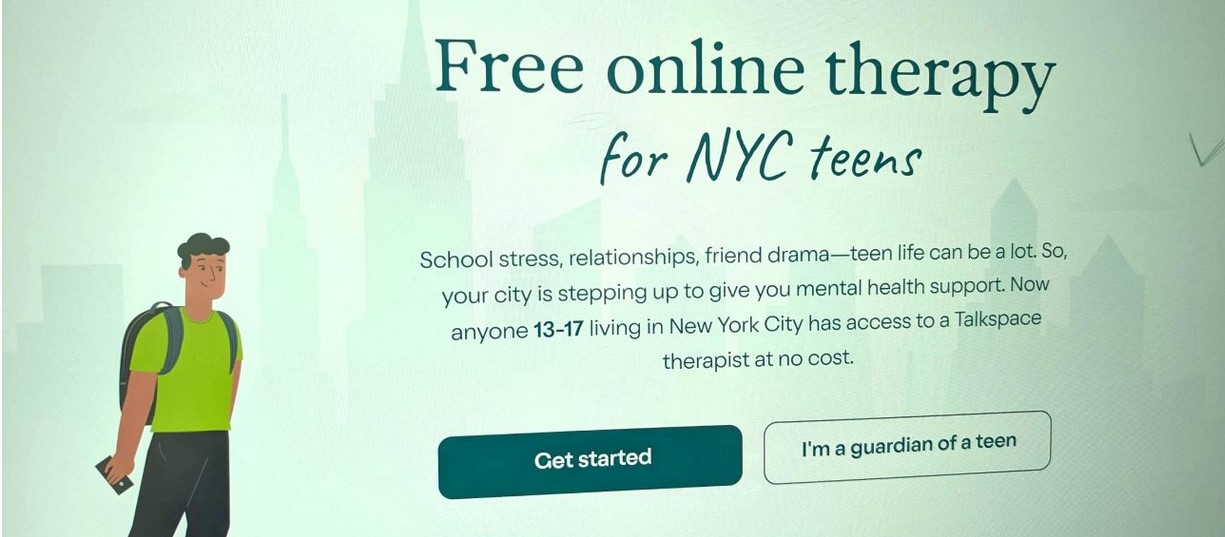
Last Tuesday, Parent Coalition for Student Privacy, NYCLU and AI for Families sent a letter to the Mayor, Chancellor Banks, and the Commissioner of Health, expressing our deep privacy concerns with the city's contract with  Talkspace, and their promotion of their online mental health services for teens, called Teenspace.  Both the Mayor and Chancellor Banks have repeatedly hyped the great quality of these services and encouraged students to sign up, including Banks at a town hall meeting last weekend.  There are also links to Teenspace on the DOE website and on the websites of individual NYC public schools. 

The city is paying $26 million for these services, despite the fact that Teenspace collects a huge amount of very sensitive personal information from students before they even create an account  or are given access the company's privacy policy – and much of this information would be barred from collection by the federal student privacy law PPRA without parental knowledge and opt out, if DOE had contracted for these services rather than the city's Department of Health.  The list of these extremely sensitive questions is included in an appendix to our letter. 

To make things worse, the Teenspace privacy policy says students' personal data can be used for marketing purposes, which would be prohibited by the NY Ed Law 2D, again if the DOE had signed the contract. In 2022, several US Senators wrote to Talkspace, pointing out how the company also appeared to be taking advantage of a “regulatory gray area” in HIPAA, to exploit the data of their clients for profit. 

Especially with all the breaches and misuse of student data by DOE contractors, the privacy of NYC students should be better protected than this. As the letter notes, there has also been widespread consumer complaints about Talkspace’s inadequate counseling services and the overcharging of clients.  Our letter was covered by  Daily News , Chalkbeat , State Scoop  and K12 Dive.

After sending the letter, we additional learned that Talkspace has been sued in California for sharing the personal information of website visitors and those who signed up for accounts with TikTok, including the personal information of minors, only adding to our concerns. 


Wednesday, September 20, 2023

Dangers of DOE plans to expand online learning and ed tech

Last night I gave a presentation on the ways in which DOE is failing to protect student privacy at a meeting of CEC 15; today I'm testifying on the dangers to both privacy and the quality of education of DOE's plans to expand the use of online learning.  Both presentations are below.  

We are looking for NYC parents and teachers who are concerned about these issues to join a new working group to investigate and advocate on this issue.  If you're interested, please let us know at info@studentprivacymatters.org  Thanks! 

Monday, September 18, 2023

Make your voice heard: how should the DOE be reducing class size?


Update:  You can also email your suggestions and comments to ClassSize@schools.nyc.gov by Wednesday, October 4th at 12 midnight.

The Class Size Working Group appointed by the Chancellor to help develop a plan to lower class size citywide in accordance with the new state law is holding public engagement sessions online and in person starting next week to present their preliminary proposals and get feedback:  

Tuesday, September 26th - 5- 7:30pm online (Manhattan/Brooklyn);  

Wednesday, September 27th - 5- 7:30pm online (Queens/Bronx/Staten Island) 

Monday, October 2ndCitywide from 5- 7:30pm in person at the MLK Campus Auditorium, 122 Amsterdam Ave,  Manhattan.

Registration links for each of these sessions are here: https://learndoe.org/class_size/  

Please register, attend, and let your voice be heard, especially as those few vocal parents who opposed the law and urged the Governor to repeal it are already doing outreach. 

More information about these hearings and a summary of the draft proposals are on the Infohub website here.

Full disclosure:  I am a member of the Working Group and Class Size Matters along with many other advocacy and parent groups advocated for the passage of the law.

Wednesday, April 22, 2020

Letter to the Panel on Educational Policy about DOE's unnecessary spending on contracts

Let us know if you'd like your organization to sign onto this letter by noon tomorrow 4/23/20, by sending your name, position and organization to info@classsizematters.org.  Thanks!


Dear members of the Panel on Educational Policy:
We wanted to make sure you saw this attached letter sent by the NYC Comptroller to the Chancellor, asking him why he intends to spend up to $700 million for busing services this year that are not being used, before you’re asked to vote to approve these contracts next week, on Wed. April 29.
The proposed spending on busing is especially egregious given the city’s fiscal crisis, and the more than $800 million that the DOE has proposed in budget cuts to education next year.  We can envision no legal or programmatic reason to extend these contracts at this time.  Even if these were existing long-term contracts, they contain provisions known as Force Majeure, which allow either party to cancel any financial obligations in case of unexpected emergencies such as epidemics, as the NYC Comptroller’s letter points out. 
We also urge you to  ask the DOE about other contracts and pending to be voted upon, that if eliminated, along with these busing contracts, could obviate the need for any budget cuts to schools next fall:

  • Why should DOE be authorized to spend $4.5 million for additional nurses now, when we have about 1400 nurses already on staff and only about 70 Resource Enrichment Centers operating at the current time?  What are the existing nurses on staff doing, and how would these additional nurses be deployed this year?
  • How much is the DOE paying for each iPad, for sim cards to access the internet, and for all of this collectively?  And why was the decision made not purchase laptops instead, which are more useful to students?  According to the NY Post, a City Council source said that the DOE is paying  $625 for each iPad – unclear if this included the sim cards.  Assuming this is the price and they are purchasing 225,000, if laptops were bought instead at about $200 each, this might have saved as much as $100 million, about equal to what the DOE proposes to cut Fair Student Funding from school budgets next year.
  • Why does DOE want to spend an additional $40.5M for IBM to “stage” these iPads; why is this necessary?
  • What is the per hourly rate charged by  Accenture for consulting during the COVID crisis, amounting to $1.2 million, and exactly what will they be doing?
  • Why is the DOE asking the PEP to approve an additional $3.4 million for professional development for the current school year, considering it will likely go unused and the Chancellor is proposing to cut $98 million from PD next year?
  • Why is there still a need for $40.8 million in custodial supplies, although the vast majority of schools closed more than three months early? With it still uncertain as to whether schools will be open this summer either, it would appear that custodial supply needs should be reduced significantly this fiscal year and into the summer months.  
  •  At the contract committee meeting that happened last week, Lindsey Oates, the DOE CFO, stated that most of these contracts were decided upon 45 days ago when schools were still open.  Why then haven’t they since been reconsidered and taken off the list for this year?

We hope if you ask these questions of DOE, you can obtain responses in writing, so they can be shared with the public.  If any of these questions are not answered to your full satisfaction, we urge to vote not to approve these contracts.
The PEP is supposed to be an independent voice that can represent the public interest, and provide checks and balances on the Mayor’s unilateral authority.  In August of 2009, the state legislature amended the school governance law to require that the PEP vote on every contract over a million dollars, to ensure that every dollar spent on education in NYC is not wasted.
We hope you fulfill that intended role, which given the city’s fiscal crisis and proposed budget cuts, is more important than ever.
Additional information about these proposed contracts is contained in two NY Post articles, here and here, as well as two posts on the Public School Parents blog, here and here. 

Yours sincerely,

Leonie Haimson, Class Size Matters

Naila Rosario, NYC Kids PAC

Community Education Council District 3

Community Education Council District 4

Community Education Council District 6